 Free shipping for all U.S. orders over $100


Last Updated: November 8, 2026
Quick Summary
The clearest signs your wood stove needs new parts are a frayed or flat door gasket that fails the dollar bill test, a fire that races or burns out fast, and smoke escaping into the room or glass turning black within a day or two. Cracked or warped baffles, firebricks, cast iron, and chipped or cloudy stove glass also mean replacement parts are due.
- Run the dollar bill test at the top, bottom, and both sides of the door to find air leaks.
- A healthy stove should drop to a lazy, smoldering burn within a few minutes of closing the air control.
- Replace a sagging or cracked baffle board rather than patching it, since a failed baffle sends heat up the flue.
- Confirm your stove's make, model, and serial number from the data plate before ordering any part.
- Inspect each component at the start of every heating season and replace on condition, not on the calendar.
Table of Contents
- 1. The Door Gasket Is Frayed, Flat, or Letting Air In
- 2. The Fire Is Hard to Control or Burns Out Fast
- 3. Smoke Escapes Into the Room or the Glass Turns Black
- 4. Cracked or Warped Parts: Baffle, Firebricks, and Cast Iron
- 5. Wood Stove Glass Replacement: Cracks, Cloudiness, and Loose Panels
- 6. How to Identify Your Old Wood Stove Model Before Ordering Parts
- 7. A Component-by-Component Inspection Checklist
- Order the Right Part the First Time
- Frequently Asked Questions
1. The Door Gasket Is Frayed, Flat, or Letting Air In
A worn door gasket is the most common reason a wood stove starts acting up, and it's the first thing to check when you notice signs your wood stove needs new parts.
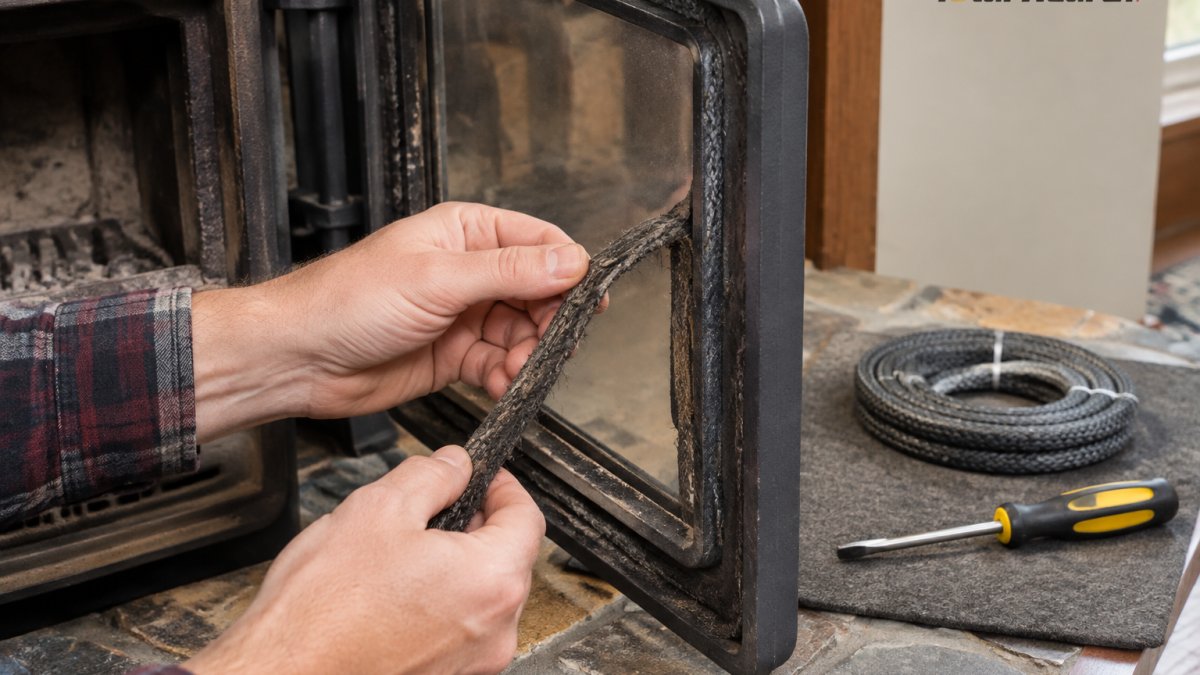
Run your fingers along the rope. A healthy gasket feels springy and full. A failing one looks frayed, feels hard, or has gone flat where the door presses against it.
The Dollar Bill Test for a Failing Door Seal
The dollar bill test tells you whether the door seal still grips. Lay a bill across the gasket, close and latch the door, and pull it out slowly.
- Firm resistance: the seal is good.
- Slides out easily: that spot has an air leak.
- Test four spots: top, bottom, and both sides.
If the bill slips out at any point, the gasket needs replacing. A poor seal lets air in, so the fire burns hotter and faster than you want. For a full walkthrough, see our guide on 7 steps to fix a wood stove door air leak.
Wood Stove Door Gasket Replacement in Four Steps
Replacing a door gasket is a job most homeowners can handle in under an hour.
- Remove the old gasket. Pry it out of the groove with a flat screwdriver.
- Clean the channel. Scrape out old adhesive and wipe the groove clean.
- Apply high-temp adhesive. Run a bead around the channel, then press the new rope in place.
- Cure before lighting. Let the adhesive set fully before you build a fire.
A complete kit makes this simple. Our Jøtul door rope gasket kit includes 7 feet of graphite-embedded fiberglass rope and a 2 oz tube of high-temperature adhesive. Graphite-embedded fiberglass is the material of this gasket kit. For a deeper walkthrough, read our step-by-step rope replacement guide.

2. The Fire Is Hard to Control or Burns Out Fast
When the fire races away from you, the stove is pulling air from somewhere it shouldn't, or the air controls are no longer doing their job. That's one of the clearest signs your wood stove needs new parts in the air system.
Watch for these patterns:
- The fire climbs fast even with the air controls shut down.
- You load the stove and it's ash within a couple of hours.
- Starting a fire takes more kindling than it used to.
How the Air Controls Actually Work
Most wood stoves have two air paths. Primary air enters under or through the door and feeds the fire directly. Secondary air enters above the fire, often through tubes at the top of the firebox, and burns the gases that would otherwise go up the flue as smoke.
Check the linkage first. With the stove cold, move the air lever through its full range and watch the air inlet. The flap or slider should open and close smoothly and seat fully.
Diagnostic Tests: Is It the Stove or the Chimney?
Before you order an air control part, rule out the chimney and the fuel. A stove that won't hold a fire can have a sound air control and a blocked or undersized flue.
- The damper test: with a small fire established, close the air control fully. A healthy stove should drop to a lazy, smoldering burn within a few minutes. If the fire keeps roaring, air is entering somewhere other than the control, check the door gasket, the ash pan door, and the flue collar joints.
- The ash pan door test: latch the ash pan door and look for a gap at the seal. A loose or warped ash pan door feeds the fire extra air and is easy to miss.
- The flue check: with the stove cold, look up the flue with a flashlight or run a chimney brush. A clogged flue can't pull smoke up and out, and the stove may backdraft or burn sluggishly.
If the air control passes the lever test, the gasket passes the dollar bill test, and the flue is clear, the control itself is the likely culprit.
Watch out: never tape, wedge, or otherwise defeat an air control to force a hotter fire.
3. Smoke Escapes Into the Room or the Glass Turns Black
Smoke rolling into the room is a safety issue, not just a nuisance. Stop using the stove and find the cause before you light another fire.
Black glass is the milder cousin of this symptom. Because poor airflow and creosote buildup can point to trouble beyond the stove, Chimney Pro can help you recognize when the chimney itself needs attention.
Check these in order:
- Door gasket: a poor seal lets smoke slip past the door.
- Chimney and flue: a clogged flue can't pull smoke up and out.
- Draft: a cold chimney or a house that's too tight can stall the draft.
A chimney cleaning and a gasket check are the usual first steps for smoke complaints. If the gasket is frayed and the glass keeps going black, replace the seal first.
4. Cracked or Warped Parts: Baffle, Firebricks, and Cast Iron
Cracked and warped parts are among the most serious signs your wood stove needs new parts, because they affect both heat output and safety. The baffle, firebricks, and cast iron take the worst of the heat.
Look for:
- A baffle board that sags, cracks, or has burned-through spots.
- Firebricks that are cracked, crumbled, or missing.
- Warped cast iron on the door or the firebox frame.
A damaged baffle lets heat shoot straight up the flue instead of into the room. That's reduced heat output you'll feel on a cold night.
Wood Stove Baffle Plate Replacement: When a Sagging Board Has to Go
A baffle that sags or cracks needs replacing, not patching. It sits above the fire and forces heat and gases to take a longer path, which is how the stove squeezes more heat out of the wood.
Our WoodPro WS-TS-2500 baffle board set is a two-piece kit rated to 2,100°F. It's made from Superwool Plus, a rigidized fiber that holds up to constant high heat. Confirm the dimensions against your owner's manual before ordering.

Damaged Firebricks and a Warped Firebox Lining
Firebricks protect the steel firebox from direct flame. A cracked brick lets heat reach the metal, which can warp it over time. Replace cracked or missing bricks before they cause bigger damage.
Our replacement firebrick measures 9" x 4½" x 1¼" and is rated to 2,700°F. It fits many Vermont Castings models and other stoves by size. It can be cut with a diamond blade wet saw for a precise fit.
5. Wood Stove Glass Replacement: Cracks, Cloudiness, and Loose Panels
A cracked stove glass is a safety risk and needs replacing before the next fire. Cloudy glass is a warning sign, and a loose panel means the door isn't sealing.
Here's how to tell them apart:
- Cracks or chips: replace the panel. Never run a stove with cracked glass.
- Cloudiness that won't clean off: the glass is etched from heat and needs replacing.
- Loose panel: the retainers have worked free, or the gasket behind the glass has failed.
Use ceramic or pyro-ceramic glass made for wood stoves. Tempered glass is not suitable for wood stove doors. Our Vermont Castings Defiant ceramic glass panel is rated to 1,400°F and fits either door side on Defiant models.

6. How to Identify Your Old Wood Stove Model Before Ordering Parts
Before you order any part, confirm your stove's make and model. Ordering the wrong part is the most common and costly mistake we see.
Find the data plate, usually on the back of the stove, inside the door, or under the ash lip. Copy down the make, model, and serial number. Our guide on how to identify an old wood stove model walks through the details.
7. A Component-by-Component Inspection Checklist
A yearly inspection catches small problems before they become expensive ones. Work through this checklist at the start of each heating season, with the stove cold and the firebox empty. Each row gives you the method, the pass/fail sign, and what to do about it.
| Component | How to Inspect | Pass | Fail, Replace or Repair |
|---|---|---|---|
| Door gasket | Run fingers along the rope; dollar bill test at top, bottom, and both sides | Springy, full, grips the bill firmly | Frayed, flat, hard, or bill slides out easily, replace the gasket |
| Baffle | Lift or sight along the board; look for sag, cracks, burn-through | Flat, intact, seated on its supports | Sagging, cracked, or burned through, replace the baffle board |
| Firebricks | Tap each brick; look for cracks, crumbles, gaps | Tight joints, no cracks wider than a hairline | Cracked, crumbled, or missing, replace individual bricks |
| Stove glass | Look for chips, cracks, cloudiness; check retainers | Clear, tight, no chips | Chipped, cracked, or etched, replace the panel |
| Ash pan door | Latch it and look for a gap at the seal; check the latch tension | Snug seal, latch holds | Worn seal or loose latch, replace the seal or latch |
| Cast iron | Look for warps, cracks, and gaps at the firebox frame | True surfaces, no cracks | Warped or cracked in a structural spot, get a pro opinion before repairing |
| Air controls | Move the lever through its range and watch the inlet flap | Smooth travel, flap seats fully | Loose, stuck, or detached linkage, repair or replace the control |
Diagnostic Tests for Leaks and Draft Problems
Two simple tests separate a failed stove part from a chimney or fuel problem.
- The dollar bill test for door seals: lay a bill across the gasket, close and latch the door, and pull slowly. Firm resistance means the seal is good. A bill that slides out easily marks an air leak at that spot.
- The smoke test for draft: with a small fire established, hold a lit incense stick near the door seams and the flue collar. Smoke that pulls toward a seam means air is entering there. Smoke that drifts into the room means the draft is stalling, check the flue and the chimney before you order stove parts.
Repair or Replace? A Decision Guide for Older Stoves
Use this rule of thumb when a stove needs work.
- Repair if the stove is otherwise sound and the part is available. A gasket, baffle, brick, or air control is a contained fix.
- Replace if the firebox or cast iron is cracked in a structural spot. That's a safety issue no part will fix.
- Get a pro opinion if the stove is very old or the damage is widespread.
Stoves with one or two worn parts are often worth repairing, and many gaskets, bricks, and baffles are within reach of a careful homeowner. Structural cast iron and firebox repairs call for a qualified technician, and a cracked firebox is a reason to stop using the stove until it's assessed.
Expected Service Life by Component
Lifespan varies with burn rate, fuel moisture, and how hot the stove runs, but a common pattern is:
- Door gasket: a few heating seasons of regular use before it flattens or frays.
- Firebricks: several seasons; bricks in the hottest part of the firebox go first.
- Baffle board: several seasons, sooner if the stove is run hard or overfired.
Use these as a planning guide, not a schedule. Inspect each season and replace on condition, not on the calendar.
Sourcing the Correct Part
Before you order, confirm the make, model, and serial number from the data plate on the back of the stove, inside the door, or under the ash lip. Match the part number to your model, and check the dimensions against the owner's manual. If the plate is gone, measure the firebox and photograph the door and baffle, our guide on how to identify an old wood stove model walks through what to capture.
Order the Right Part the First Time
Getting the right part starts with a careful look at your stove. Check the gasket, baffle, bricks, and glass each season.
At Total Hearth, we stock replacement parts for wood, pellet, and gas stoves, plus custom-cut ceramic glass made to your exact specs.
Ready to fix the problem you found? Get started with Total Hearth and order the exact part your stove needs, backed by expert help to confirm the fit.
Frequently Asked Questions
How often should you replace a wood stove door gasket?
The gasket is the first wood stove part to fail because it compresses every time the door closes. Run the dollar bill test each fall: shut a bill in the door at several points around the frame and pull. If it slides out with no resistance, the seal is spent. A Jotul rope gasket kit with adhesive costs about $28.99 and covers a full door, which is far cheaper than the extra cordwood a leaky seal wastes.
How can you tell if a wood stove baffle plate needs replacing?
Look up inside the firebox with a flashlight. A healthy baffle sits flat and holds its shape. Wood stove baffle plate replacement is due when the board sags, cracks through, crumbles at the edges, or has a hole burned through it. A failing baffle sends heat straight up the flue, so you will notice weaker heat output and dirtier glass at the same time. WoodPro WS-TS-2500 owners can use the 2952A baffle board set, a two-piece Superwool Plus kit rated to 2100°F, for $76.90.
When should a cracked wood stove glass be replaced?
Replace it before the next fire. Even a hairline crack in a stove door panel can spread once the glass heats and cools, and a full break leaves the firebox open with no barrier. Cloudiness that will not scrub off and a loose panel in its retainer are also signs it is time. Use ceramic or pyro-ceramic glass rated for high heat, never tempered glass, which can fail above 450°F. A Vermont Castings Defiant replacement panel, part 3000-5247, is rated to 1,400°F and sells for $164.88.
Can you replace parts on an old wood stove with no visible model plate?
Yes, but you need to identify the stove first. Check the back of the unit, the firebox floor, and the underside of the ash lip for a data plate, then measure the firebox and door opening. Photograph the stove and any casting numbers, and send those details to a parts specialist who stocks obsolete components. Firebricks such as part 1601103, a 9 by 4.5 by 1.25 inch brick rated to 2700°F, fit many older Vermont Castings models and cost $5.99 each.
