 Free shipping for all U.S. orders over $100


Last Updated: November 11, 2026
Quick Summary
Avoid poor quality stove parts by buying OEM components for anything carrying heat, gas, or electricity, and verify the part number against your model's parts diagram before paying. Check the manufacturer and part number on the component or packaging, look for real photos, and read the seller's return and warranty terms, and walk away from vague policies or prices far below every other listing.
- OEM parts match factory dimensions, heat ratings, and tolerances; aftermarket quality varies widely.
- Common failure points include igniters on gas stoves and door gaskets on wood stoves.
- Check the manufacturer and part number on the component or its packaging, and verify compatibility with your exact stove model.
- Read return and warranty terms separately. A return window alone does not establish product quality or coverage after installation.
Table of Contents
- Why Cheap Stove Parts Cost More Than They Save
- OEM vs Aftermarket Appliance Parts: What the Difference Means for Your Stove
- The Risks of Cheap Stove Replacement Parts
- How to Identify Genuine Stove Parts Before You Pay
- Matching Part Numbers, Model Numbers, and Fitment
- Vetting Sellers: Return Policies, Warranties, and Red Flags
- Safety Hazards in Electrical and Gas Stove Components
- Ordering Replacement Stove Parts That Fit the First Time
- Frequently Asked Questions
Why Cheap Stove Parts Cost More Than They Save
The cheapest part on the page is rarely the cheapest repair.
A cheap igniter can save money today, then quit mid-winter. You pay again for the part, the shipping, and possibly a technician.
That is false economy: saving money upfront and losing more later.
Below, we cover how to spot genuine parts, match part numbers, and vet sellers. We also flag the safety hazards cheap components create.
If your stove is already acting up, start with the warning signs your wood stove needs new parts so you know what you are diagnosing.
OEM vs Aftermarket Appliance Parts: What the Difference Means for Your Stove
OEM means original equipment manufacturer: the company that built your stove, or a supplier it authorized, made the part to factory specs. Aftermarket parts come from third parties.
The difference matters most in three places:
- Fit: OEM parts match the original dimensions and mounting points.
- Materials: Heat ratings and metal grades follow the factory spec.
- Tolerances: Small gaps cause big problems in sealed systems.
Aftermarket quality can vary widely. Critical components like heating elements, control boards, and gas valves carry real risk when they are not genuine.
Not every aftermarket part is junk, but door glass and firebox gaskets should always match your appliance manufacturer's specifications, not just overall dimensions. For anything carrying heat, gas, or electricity, OEM parts are the safer choice.
The Risks of Cheap Stove Replacement Parts
Cheap parts fail in predictable ways. Door glass and burner igniters are common failure points on gas and pellet stoves. Those are exactly the parts people try to save money on.
The risks stack up fast:
- Early failure: A part rated for less heat warps or cracks.
- Fitment issues: Bolt holes misalign, so you drill, shim, or give up.
- Cascading damage: A bad gas valve or control board can take out other components.
- Voided coverage: Manufacturer warranties often exclude damage from non-genuine parts.
Targeted part identification can often prevent unnecessary full-appliance replacement.
How to Identify Genuine Stove Parts Before You Pay
Genuine stove parts carry verifiable marks. Check these before you pay, not after the box arrives.
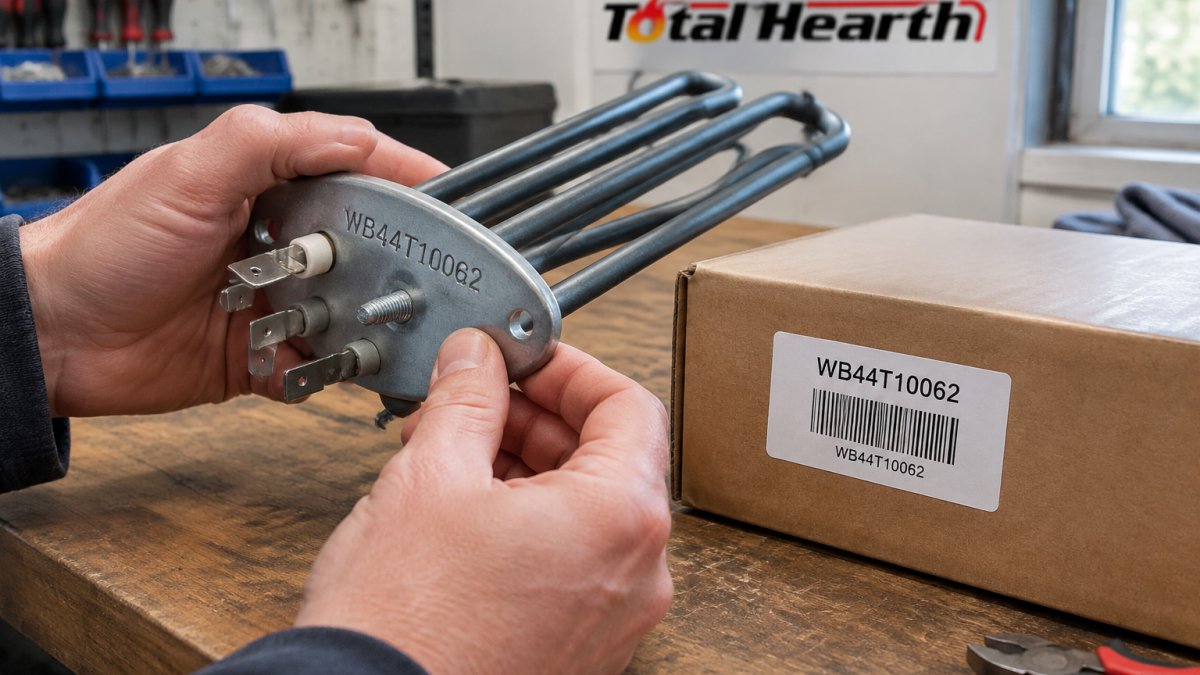
What to inspect:
- Part number. Check that the part number printed or marked on the part matches the number listed for your exact model.
- Packaging quality. Look for the manufacturer's branding, part number, and a batch or lot code.
- Material weight. Pick it up. Thin, light metal is a red flag on heat components.
- Finish and machining. Rough edges, sloppy welds, and uneven coatings signal low quality control.
- Paperwork. Genuine parts ship with documentation or a warranty statement.
Rigorous quality control in manufacturing helps catch both visible and measurable defects.
Compare your part against an OEM ash pan replacement to see what clearly listed part specifications can look like.
Matching Part Numbers, Model Numbers, and Fitment
Most wrong orders trace to one mistake: using the wrong number. Your model number identifies the stove; the part number identifies the component.
Where to find each number:
- Model and serial plate. Usually behind the door or on the back panel. Photograph it before you shop.
- Part number. Stamped or printed on the old part itself, and listed in the owner's manual or parts diagram.
- Serial number range. Some manufacturers change part numbers mid-production without changing the model number. The serial plate tells you which revision you have.
How to cross-reference correctly:
- Look up your exact model in the manufacturer's parts diagram, not a third-party compatibility list.
- Match the part number from the diagram against the number stamped on your old part.
- If the numbers differ, check whether the manufacturer superseded the old number with a new one, a common pattern on control boards and igniters.
- For door glass and firebox gaskets, always follow your appliance manufacturer's specifications rather than choosing by dimensions alone. For blowers, confirm dimensions against the old part.
- Check the serial number range on the listing against your plate.
Why "compatible with" lists fail:
A long compatibility list does not guarantee fit. Verify the exact part number, model, and applicable serial-number range before ordering.
A visual check that catches most errors:
Before ordering, place the old part next to the listing photo and compare three things: the mounting hole pattern, the connector type and pin count, and the overall length. If any of the three differs, stop. A part that bolts up but has the wrong connector will not run, and a part with the right connector but a different hole pattern will not seal.
Older stoves need extra care because standard fitment references dry up and superseded numbers are harder to trace. If yours is a legacy model, our guide to finding parts for vintage wood stoves walks through the lookup process.
Watch out: a seller who cannot tell you the part number, the serial range, and the return window in one message is not a reliable source for a safety-critical component.
Vetting Sellers: Return Policies, Warranties, and Red Flags
A genuine part from a bad seller is still a bad purchase. The fastest way to judge a seller is to read the return policy and warranty before you read the product description. Sellers who stand behind real parts write those terms down; sellers moving substandard stock keep them vague.
How to read a return policy as a quality signal:
- Find the stated window. A written window of 30 days or more on a heating element or gas valve shows the seller is willing to stand behind the part, though a return window alone is not proof the part will perform well after installation. Not every all sales final policy is a red flag though: custom cut glass, such as the glass used in stove and fireplace doors, is final sale under Total Hearth's own policy, so seeing that term on a cut to size glass product is normal, not a warning sign. On a standard stocked part, an all sales final policy with no stated return window is still worth asking about before you buy.
- Check who pays return shipping. A seller who covers return shipping on defective parts is usually confident in the supply chain. A policy that makes you pay shipping both ways on a $40 igniter can cost more than the part.
- Look for a restocking fee. A 15% restocking fee on a $200 control board means a wrong order costs you $30 before you ship it back. Ask about the fee in writing before checkout.
- Confirm the part must be uninstalled. Many policies void returns once a part is installed. That is reasonable for fitment, but a defective part should still be covered, read whether the policy separates "wrong part" from "failed part."
- Read the warranty length and who honors it. A 90-day parts warranty from the seller is common; a one-year manufacturer warranty is stronger. A warranty that requires you to ship the part to a third party at your cost is weaker than it looks.
Warranty red flags:
- "Lifetime warranty" with no written terms or contact method.
- Warranty that excludes "consequential damage" but also excludes the part itself after 30 days.
- No warranty statement anywhere on the product page.
Seller red flags beyond the policy:
- Prices far below every other listing for the same part number.
- Listings with no part number in the title or specs.
- Stock renders instead of real photos of the actual part.
- No phone number, business address, or human contact path.
- "Compatible with" lists that name dozens of unrelated models.
Green flags:
- Part number, dimensions, and compatibility list shown up front.
- Real product photos showing stamps, labels, and packaging.
- A written return window and warranty statement on the same page.
- A phone number and a physical business address.
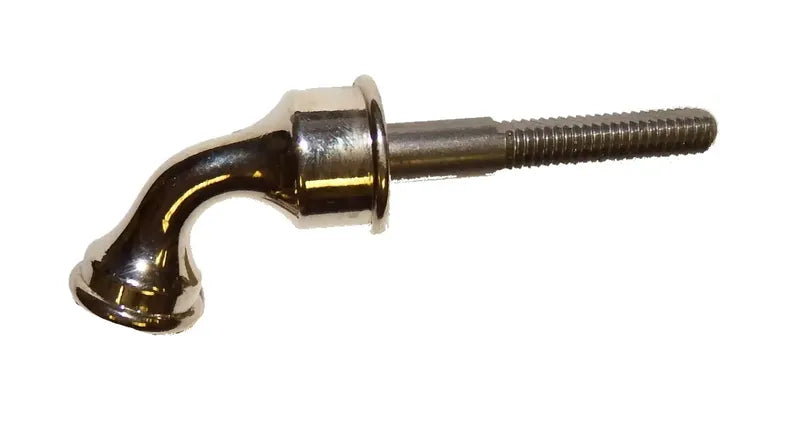
Ask one question before buying: "If this arrives wrong or fails in the first 90 days, who pays, and how do I start the claim?" If the answer is unclear, walk away. This OEM stove handle listing shows what a clean, verifiable product page looks like, with part number and dimensions shown clearly.
Safety Hazards in Electrical and Gas Stove Components
Safety is where cheap parts stop being a budget issue. Gas and electrical components fail dangerously, not quietly.
A gas leak from a gas stove is never a cosmetic issue. Treat any gas smell as a safety event, not a maintenance delay.
Watch out: if you smell gas, leave the area immediately, avoid any ignition sources, and call 911 and the gas utility from a safe location.
High-risk components to buy genuine:
- Gas valves and thermocouples
- Heating elements
- Control boards
- Igniters and safety switches
- Door gaskets that seal the firebox
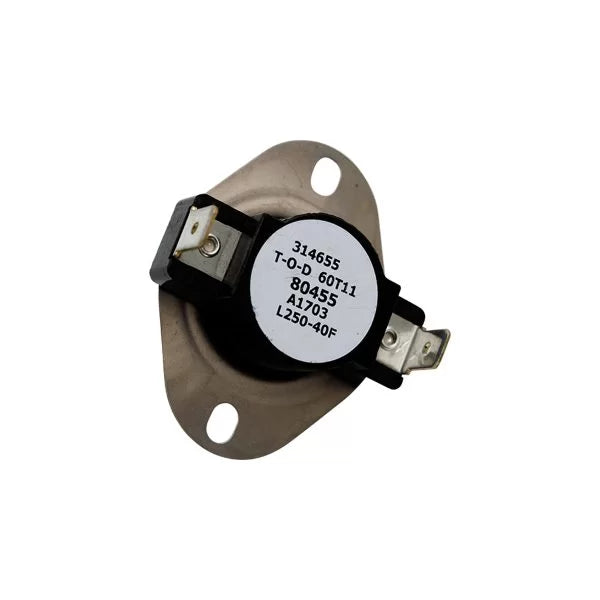
A quality gasket keeps combustion controlled. A cheap one leaks air, overheats the stove, and shortens component life. This OEM safety switch shows the kind of component worth paying for.
Ordering Replacement Stove Parts That Fit the First Time
A first-time fit comes down to a checklist, not luck. Run it every order.
| Step | What to Do | Why It Matters |
|---|---|---|
| 1 | Record model and serial number | Confirms exact stove version |
| 2 | Find the part number in the manual | Prevents guesswork |
| 3 | Measure the old part | Catches listing errors |
| 4 | Verify OEM vs aftermarket | Sets quality expectation |
| 5 | Check the return policy | Protects your money |
| 6 | Confirm shipping speed | Avoids a cold week |
Ordering early matters if your stove is your primary heat.
At Total Hearth, we stock replacement parts for wood, pellet, and gas stoves, plus custom-cut ceramic glass made to your exact measurements.
Cheap stove parts are a gamble you rarely win. Buy genuine, match your numbers, and vet every seller.
Get started with Total Hearth and get the right part the first time.
Frequently Asked Questions
What is the difference between OEM and aftermarket stove parts?
OEM parts are built and tested by the original equipment manufacturer to the same specification as the component that came with your stove. Aftermarket parts are made by third parties and vary widely in quality. Some aftermarket gaskets and fasteners work fine, but genuine parts are the safer choice for critical components like heating elements, control boards, and gas valves, where a failure can affect safety and performance. Always confirm the part number before ordering either type.
How can I verify if a stove part is genuine?
Start with the part number. Genuine stove parts carry a manufacturer part number stamped, etched, or printed on the component or its packaging, and that number should cross-reference cleanly to your model's parts diagram. Check the seller's reputation and whether they list the manufacturer name and part number together. Be wary of listings with no part number, vague photos, or prices far below every other source. When in doubt, call the seller and ask them to confirm the part number against your model.
Are universal stove parts safe to use?
Universal parts are not automatically safe just because they are inexpensive. For firebox gaskets and door glass, always follow your stove manufacturer's specifications rather than choosing based on dimensions alone, since fit, material, and heat rating affect performance and safety. They are a poor choice for gas valves, thermocouples, control boards, and heating elements, where fitment and tolerances are tied to your specific model. A universal gas valve that seals imperfectly can leak. Match the part number first, and use OEM or OEM-grade components for anything carrying gas or line voltage.
What are the risks of installing low-quality stove components?
Low-quality igniters and heating elements tend to fail early. Beyond repeat repairs, low-quality gas components can leak, and gas leaks from stoves can release pollutants indoors. Substandard electrical parts also raise shock and fire risk. Buy from a verified source with a real return policy.
