 Free shipping for all U.S. orders over $100


Table of Contents
- Why Finding Parts for Vintage Wood Stoves Matters
- How to Identify Old Wood Stove Model, Make, and Age
- Understanding Wood Stove Parts Diagram and Component Names
- Sourcing Obsolete Wood Stove Parts
- Custom Wood Stove Glass Replacement and Fit Verification
- Repair, Replacement, or Restoration: Making the Right Call
- Safety and Code Considerations for Vintage Wood Stoves
- Frequently Asked Questions
Last Updated: October 18, 2026
Why Finding Parts for Vintage Wood Stoves Matters
Finding parts for vintage wood stoves has become increasingly challenging as manufacturers discontinue models and supply chains shift.
The real problem isn't that parts don't exist.
Total Hearth has helped thousands of customers track down components for stoves that haven't been manufactured in 20, 30, or even 40 years. Below, we'll show you how to identify your stove, understand its parts, source what you need, and decide between repair and replacement.
How to Identify Old Wood Stove Model, Make, and Age
Finding the right parts starts with knowing exactly what you're looking for: your stove's model, manufacturer, and year of production. Here's the identification process, including what to do when labels are missing.
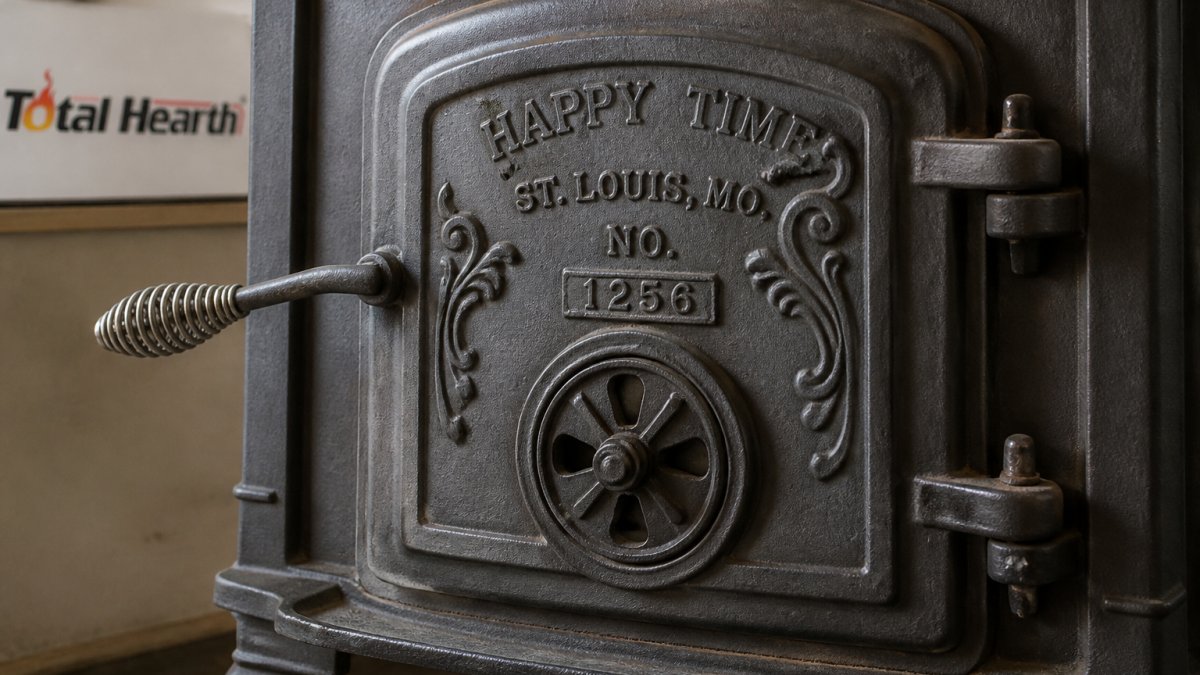
Step 1: Locate Serial Numbers and Manufacturer Markings
Most manufacturers stamped or cast their name, model number, and serial number directly into the iron. Check these locations in order:
- The door frame and the face of the firebox door
- The back of the firebox and the rear heat shield
- The underside of the cooking surface or top plate
- The sides of the stove body and the base
- The flue collar and the area around the stove pipe outlet
Write down every marking, even if you're not sure what it means. Serial numbers often include date codes: some used simple year stamps (like "1987"), others embedded the date in a longer alphanumeric code that requires research to decode.
If markings are worn or illegible, photograph them under different lighting angles, harsh side lighting can reveal details invisible to the naked eye. Post the photos in antique stove or wood heating communities; experienced collectors can often decipher faded markings.
Step 2: Use Physical Features and Dimensions
When markings are missing or illegible, physical characteristics become your detective work. Measure the stove's overall dimensions, firebox opening, cooking surface, and distinctive features like casting patterns, door handle style, or grate configuration.
Record these measurements in inches and keep them with your photos:
- Overall width, depth, and height
- Firebox opening width and height
- Door dimensions and hinge spacing
- Flue collar diameter and location
- Grate dimensions and bar spacing
Vintage wood stoves vary dramatically in design, ornate Victorian styling, utilitarian cast-iron boxes, or side-loading fireboxes and integrated cooktops. These details, combined with your measurements, can narrow down the manufacturer and model significantly.
Step 3: Cross-Reference and Confirm
Search online using these measurements and design features. Antique stove forums, manufacturer archives, and dealer websites often have photo galleries organized by era and style. Cross-referencing takes patience but is far more reliable than guessing.
When you think you have a match, confirm it with a second source before ordering. A dealer who can cross-reference your serial number is the strongest confirmation; if two independent sources agree on the model, you can order with confidence.
What to Do When Labels Are Missing
If no markings survive, rely on your measurement and feature record. Contact specialist dealers with your photos and dimensions; many identify common models from casting patterns alone. Owner forums are especially useful, since collectors recognize distinctive castings that never appeared in catalogs. As a last resort, a hearth professional can inspect the stove in person.
Understanding Wood Stove Parts Diagram and Component Names
Once you've identified your stove, understand what each component does and what it's called, this prevents costly ordering mistakes and helps you communicate clearly with dealers.
A typical wood stove contains several critical systems. The firebox is the main combustion chamber. The damper controls airflow and draft, and gaskets seal joints to prevent smoke leakage.
Additional parts include the stove pipe (chimney connector), pipe collar, draft regulator, thermostatic controls, and cast-iron plates that form the stove's structure.
Sourcing Obsolete Wood Stove Parts
Finding parts for vintage wood stoves has become increasingly difficult as salvaging from other old stoves may eventually stop being an option. Work through sources in a deliberate sequence, from most authoritative to most uncertain, to save time and reduce the chance of buying a part that won't fit.
A Structured Search Workflow
Work through these steps in order. Stop as soon as you find a verified match.
- Manufacturer or current brand owner. Many discontinued stove lines were absorbed by larger hearth companies that still hold parts inventories or can point you to an authorized dealer. Check the current owner's website and call their parts line with your model and serial number.
- Specialist obsolete-parts dealers. Businesses that focus on vintage and discontinued stoves maintain inventories that general retailers do not. Hearth.com community discussions document dealers and online marketplaces as among the primary routes for sourcing vintage stove parts, including Woodman's Parts Plus, which carries components for several named stove makers.
- Salvage and reclaimed inventory. Architectural salvage yards, antique dealers focused on hearth goods, and local classifieds sometimes hold components from decommissioned stoves. This is the best route for rare castings that are no longer reproduced.
- Owner communities and forums. Collector and owner forums are where obscure cross-references, reproduction sources, and part numbers get shared. Search the forum before posting; your question has likely been answered.
- General marketplaces. eBay, Etsy, and similar platforms host both new reproduction parts and genuine salvaged components. Use these last, because seller reliability and fit verification are weakest here.
Specialist Parts Dealers and Online Marketplaces
Specialist dealers focus specifically on vintage and obsolete stove parts, maintaining inventory for discontinued models and often sourcing hard-to-find items. Have your make, model, serial number, and measured dimensions ready; dealers cross-reference far faster with specifics than with a description.
Online marketplaces like eBay and Etsy host both new reproduction parts and genuine salvaged components. The advantage is selection and competitive pricing; the disadvantage is inconsistent seller reliability and the risk of parts that don't fit.
Used, Salvaged, and Reclaimed Parts
Salvaged components from other old stoves represent another sourcing avenue.
Architectural salvage yards sometimes stock wood stove components, antique hearth dealers occasionally have cast-iron parts, and local classifieds sometimes feature homeowners selling parts from stoves they're scrapping.
The challenge with salvaged parts is verification: confirm compatibility with your specific model, check for damage or warping, and ensure gaskets and seals still function. Buying sight unseen carries significant risk.
Buying Risks and Seller Verification
Before you pay, treat every remote purchase as a compatibility and condition question. A few checks prevent most costly mistakes:
- Ask for measurements, not just photos. Request the critical dimensions in inches and confirm them against your own measurements. A photo can hide a half-inch difference that makes a part unusable.
- Ask about condition in specific terms. For cast iron, ask whether there are cracks, chips, or repairs and request close-ups of mounting points and mating surfaces. For glass, confirm the material type and thickness.
- Confirm the return policy in writing. Reputable dealers accept returns on unused parts that do not fit. Marketplace sellers often do not, so factor that risk into the price.
- Discuss shipping and damage. Cast iron is heavy and brittle; ask how the part will be packed and who bears the risk if it arrives cracked. Photograph the package before opening it.
- Verify authenticity for reproduction parts. Ask whether a part is an original casting, a new reproduction, or an adapted compatible part, and whether the seller guarantees fit for your model.
A patient, sequenced search with disciplined seller verification beats a fast purchase almost every time. The part you need usually exists; the work is proving it fits before it ships.
Custom Wood Stove Glass Replacement and Fit Verification
Stove glass is one of the most commonly replaced components because it's exposed to extreme temperature cycling and can crack, cloud, or break. Getting the right glass is critical for safety and function.
Measuring for Exact Fit and Compatibility
Standard stove glass comes in common sizes, but your door opening may not match. Measure the width, height, and thickness of your existing glass or the opening, from the inside edges of the frame, that's where the glass actually sits.
Record measurements in both inches and millimeters.
Compatibility extends beyond size. Your stove's glass must match the material type your stove was designed for. Ceramic and tempered glass behave differently under heat stress, and using the wrong type can cause failure.
Why Ceramic Glass Matters for Vintage Stoves
Tempered glass, common in car windows and buildings, is not suitable for wood stoves. It's engineered to shatter safely above 450°F, but wood stove doors regularly reach 1,200°F or higher, where tempered glass fails catastrophically.
Ceramic glass (also called pyro-ceramic glass) is engineered for high-heat applications. It withstands continuous temperatures up to 1,400°F without cracking, warping, or becoming opaque, and expands and contracts predictably under thermal stress, maintaining its seal and clarity over years of use.
Total Hearth's custom-cut ceramic glass options, like the Fisher 7G912 Ceramic Door Glass at $114.88, are precision-cut to exact specifications and made in the USA.

Repair, Replacement, or Restoration: Making the Right Call
Not every broken part warrants replacement. Sometimes repair is practical and cost-effective; sometimes a part is so obsolete or expensive that restoration makes more sense; sometimes the stove itself is at the end of its life and parts aren't worth the investment.
Ask yourself three questions. First, is the part essential to safe operation? Cracked glass, damaged grates, faulty dampers, and missing gaskets affect safety and function and must be addressed. Second, can the part be repaired rather than replaced?
If your stove is a rare or valuable antique, investing in authentic reproduction parts makes sense.
Safety and Code Considerations for Vintage Wood Stoves
Vintage wood stoves were built to older safety standards than modern appliances. Before installing a repaired or restored stove, verify it meets current code requirements in your area.
Building codes specify minimum clearances from combustibles, chimney specifications, and hearth dimensions.
Certain components, draft regulators, thermostatic controls, and gaskets, directly affect safety. If damaged or missing, repair or replacement is not optional.
Document any work you do: keep receipts for parts and records of professional inspections or repairs.
Total Hearth specializes in this exact challenge.
Frequently Asked Questions
Where can I find replacement parts for a vintage wood stove?
Specialist parts dealers like Total Hearth, Woodmans Parts Plus, and online marketplaces including Etsy and eBay carry vintage wood stove parts. For hard-to-find components, contact manufacturer-specific retailers or community forums where owners share sourcing tips. Total Hearth offers custom-cut ceramic glass and replacement components for many vintage models, with expert guidance to ensure exact fit and compatibility.
How do I identify the make and model of an old wood stove?
Start by locating the serial number and manufacturer nameplate, usually stamped on the stove's body or inside the firebox. Note physical features like size, shape, and any decorative details. Measure key dimensions and photograph the stove from multiple angles. Cross-reference your findings with online stove databases or community forums. If the nameplate is worn, the combination of serial number, dimensions, and visual features often narrows identification enough to find compatible parts.
What should I do if I cannot find a replacement part for my old stove?
Explore reproduction options through specialist dealers who can custom-manufacture parts, or consider salvaging from similar vintage stove models. Some components like gaskets and glass can be custom-cut to fit your exact specifications. Evaluate whether repair or restoration of an existing part is feasible before replacing it. If the part is unavailable and irreplaceable, consult a professional to assess whether the stove can operate safely without it.
How do I know if a vintage stove part will fit my model?
Verify the part number matches your stove's original specification first. Measure the component's dimensions carefully and compare them against the replacement part's measurements. For glass panels, measure width, height, and thickness. Contact the parts dealer with your stove's make, model, and year for confirmation before purchasing. Custom-cut glass services like Total Hearth can verify fit based on your exact measurements and stove specifications.