 Free shipping for all U.S. orders over $100


Last Updated: November 26, 2026
Quick Summary
The master forge pellet stove is a Lowe's house brand with sharply divided owner reviews: some praise its heating performance, 140-pound hopper, and Wi-Fi control, while others report feed and airflow problems. Many complaints trace back to installation, venting, or fuel quality rather than the appliance itself.
- Positive reviews highlight strong heat output, reliable ignition, and steady heat through a cold night.
- Divide hopper capacity by the manual's burn rate in pounds per hour to estimate refill intervals.
- At $5 to $8 per 40-pound bag, a stove burning 2 pounds per hour for 10 hours a day uses about one bag every eight days.
- Feed and ignition complaints cluster in the first season, while venting and gasket issues appear later as seals wear.
- Confirm warranty terms, local service access, and parts availability for your exact model number before buying.
Table of Contents
- Master Forge Pellet Stove Reviews: What Owners Actually Report
- Master Forge Pellet Stove Models, Specs, and Heating Capacity
- Master Forge Pellet Stove Problems: What Goes Wrong and Why
- Master Forge Pellet Stove Manual: Finding Specs, Settings, and Clearances
- Installation, Venting, and Clearance Basics
- Master Forge Pellet Stove Parts: Glass, Gaskets, and Replacement Components
- Maintenance Schedule and Troubleshooting Workflow
- Order the Right Replacement Glass for Your Master Forge Stove
- Frequently Asked Questions
Master Forge Pellet Stove Reviews: What Owners Actually Report
The Master Forge pellet stove is a Lowe's house brand, and owner feedback on it is genuinely split. According to Lowe's customer review summaries for the F500207, reviewers are sharply divided: some praise the heating performance, the 140-pound hopper, Wi-Fi remote control, and reliable operation, while others report the opposite experience. At Total Hearth, we supply replacement glass and components for these stoves. Below, we break down what the reviews actually say, what the specs mean in practice, and what to check before you buy or repair one.
What Reviewers Praise
Positive reviews cluster around a few themes: strong heat output for the price, a large hopper that stretches refill intervals, Wi-Fi control from another room, reliable ignition, and steady heat through a cold night.
Where the Feedback Turns Negative
The negative reviews are just as specific. Some owners describe pellets piling up in the burn pot without burning completely, a symptom that points to feed system or airflow problems rather than the stove's basic design. A Reddit discussion in r/PelletStoveTalk describes exactly this pattern, though it is a single anecdotal post and does not establish how common the issue is. What most buying guides miss is that many of these complaints trace back to installation, venting, or fuel quality, not the appliance itself. That distinction matters when you are deciding whether to repair or replace.
Master Forge Pellet Stove Models, Specs, and Heating Capacity
Specifications vary across the Master Forge line, so the model number on the data plate matters more than the brand name on the door. Lowe's product listings show different hopper capacities and heating ranges across the lineup, and a separate H3W80XL listing specifies an 80-pound hopper, while Consumer Reports lists a model with a 140-pound hopper. Do not assume one spec sheet applies to the whole brand, and do not trust a marketplace listing that omits the model number entirely.
| Model | Hopper Capacity | Notable Feature | Best For |
|---|---|---|---|
| H80XL | Varies by listing | Standard freestanding build | Smaller rooms |
| H140XL | 140 lb (per reviews) | Wi-Fi remote control | Larger spaces, longer burn time |
| H30XL | Compact | Entry-level heating range | Supplemental heat |
| H3W80XL | 80 lb | Bay front design | Mid-size rooms |
Hopper Capacity, BTU Output, and Burn Time
Hopper capacity drives burn time more than any other spec, and you can estimate it yourself. Divide hopper capacity by the burn rate in pounds per hour published in the owner's manual to get a realistic refill interval. A 40-pound bag lasts longer in a 140-pound hopper than an 80-pound one, meaning fewer refills during a cold snap.
Compare the stated BTU per hour and heating capacity against your square footage, insulation, and ceiling height. A stove rated for a large range will struggle in an uninsulated space, a room with vaulted ceilings, or a closed-off corner. A stove sized at the top of its range runs at high feed rate constantly, shortening burn time and accelerating clinker buildup.
Turning Specs into Real Operating Cost
Multiply average burn rate by hours run, then divide by bag weight for bags per week. At $5 to $8 per 40-pound bag, a stove burning 2 pounds per hour for 10 hours a day uses roughly one bag every eight days; at 4 pounds per hour, about one bag every four days. Feed rate, pellet quality, thermostat setbacks, and outdoor temperature all move the number.
Performance factors matter as much as the spec sheet. Poor insulation, leaky windows, an open floor plan, and a cold exterior wall behind the stove all raise fuel use. A stove that short-cycles because it is oversized wastes fuel on ignition and shutdown.
Master Forge Pellet Stove Problems: What Goes Wrong and Why
Most Master Forge pellet stove problems trace to three systems: the auger and feed mechanism, the ignition circuit, and airflow through the venting. What the owner discussions and review pages rarely do is separate a one-off complaint from a pattern, so treat individual posts as leads rather than evidence. A Reddit discussion in r/PelletStoveTalk describes pellets piling up in the burn pot without burning completely, which points to feed or airflow rather than the stove's basic design, but it is a single anecdotal post and does not establish how common the issue is. A common pattern across owner reports is that feed and ignition complaints cluster in the first season, while venting and gasket issues show up later as seals wear.
A Symptom-Based Diagnostic Workflow
Auger turns but delivers no fuel. This points to a jam upstream, often damp or oversized pellets or a foreign object in the auger tube.
Auger does not turn at all. This points to the auger motor, the drive mechanism, or the control board, in that order of likelihood. Test the motor per the manual before ordering a board.
Pellets pile up in the burn pot and smolder. This is usually an airflow problem: a blocked exhaust path, a vent with too many elbows, a failed combustion blower, or a door gasket that no longer seals.
Stove shuts down mid-burn. Check the high-limit switch, the vacuum switch and its hose, and whether the vent termination is clear of snow or debris.
Reliability, Warranty, and Parts Before You Buy
Wear items on pellet stoves commonly include the igniter, gaskets, auger motor, and blowers; it is useful to know which parts to keep on hand.
Before purchase, verify three things in writing. First, warranty terms: coverage length, exclusions (igniters and gaskets are commonly excluded as wear items), and whether labor is covered. Second, service access: whether the retailer or manufacturer provides in-warranty repair locally or expects you to remove and ship components. Third, parts availability: confirm the igniter, auger motor, blowers, and glass for your exact model number are orderable, because a stove with no parts path becomes disposable when a $60 component fails. Photograph the data plate model and serial number and store them with your manual, since every parts order and warranty claim starts there.
Master Forge Pellet Stove Manual: Finding Specs, Settings, and Clearances
The owner's manual is the only reliable source for clearance, venting, and temperature setting guidance on your specific model. Consult the manual for your model's clearance, venting, and temperature setting guidance. If you cannot find yours, photograph the data plate on the back of the stove first; the model and serial numbers are what any parts supplier will ask for. Keep a printed copy near the stove for maintenance reference.
Installation, Venting, and Clearance Basics
Pellet stoves require a dedicated electrical connection, correct venting termination, and clearance from combustible walls per the manual. A vent that runs too long, has too many elbows, or terminates too close to a wall restricts exhaust and causes incomplete burns. If replacing an older unit, verify the existing vent meets current requirements before connecting a new stove. When in doubt, have a qualified installer confirm the setup.
Master Forge Pellet Stove Parts: Glass, Gaskets, and Replacement Components
Replacement parts for these stoves are widely available, but fitment is where most orders go wrong. Glass, gaskets, auger motors, blowers, and electrical components are all replaceable, and matching the part to your exact model number is the whole job.
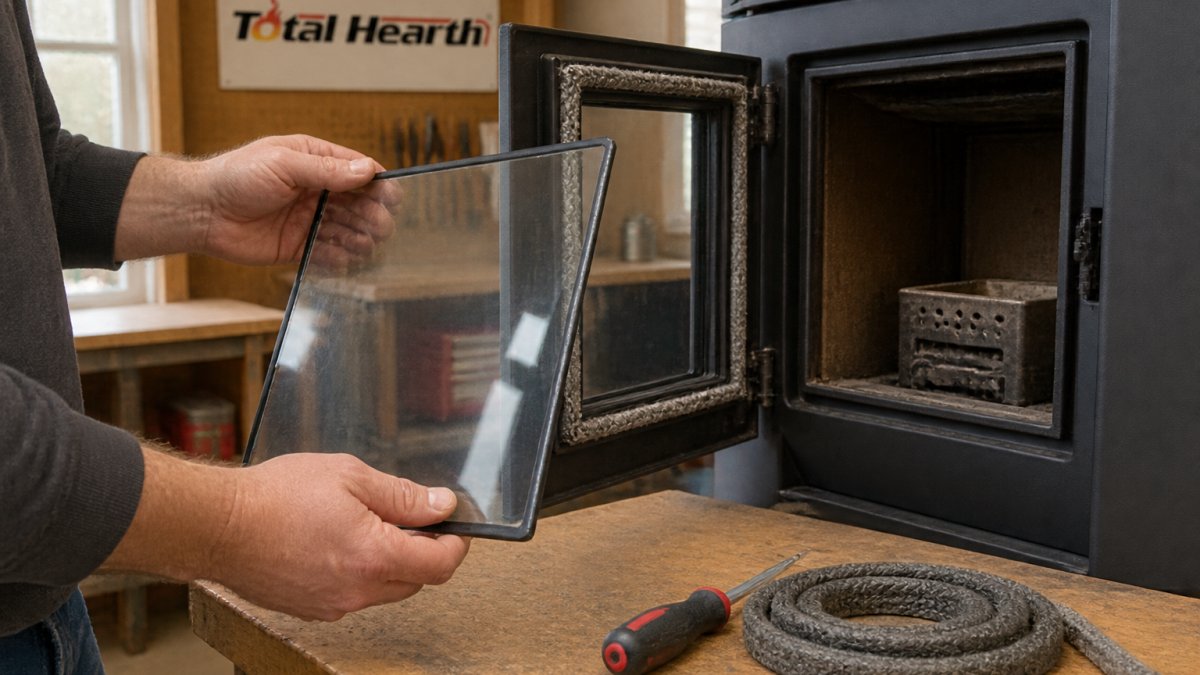
For replacement panels, our Master Forge and Cleveland Iron Works 12 3/8" x 9" ceramic glass fits the H140XL and H80XL, and if you want to browse more buying and ownership guides before deciding, check out our blog.
Matching the Right Glass Panel to Your Model
Glass sizing is model-specific, and guessing is expensive. Three common panels cover most of the line:
- 12 3/8" x 9" Pyroceram® ceramic glass, $107.88, fits Master Forge H140XL and H80XL
- 10 1/2" x 9" OEM panel, part 66665-GLASS, $105.88, fits the H30XL and is rated to 1,200°F
- 13" x 12" center door panel, part 66633-CENTER-GLASS, $161.88, fits the H3W80XL bay front
All three panels above are ceramic. If you are sourcing glass for a different stove, our Wiseway GW1949 pellet stove glass and US Stove American Harvest glass listings give you comparable dimensions to check against.
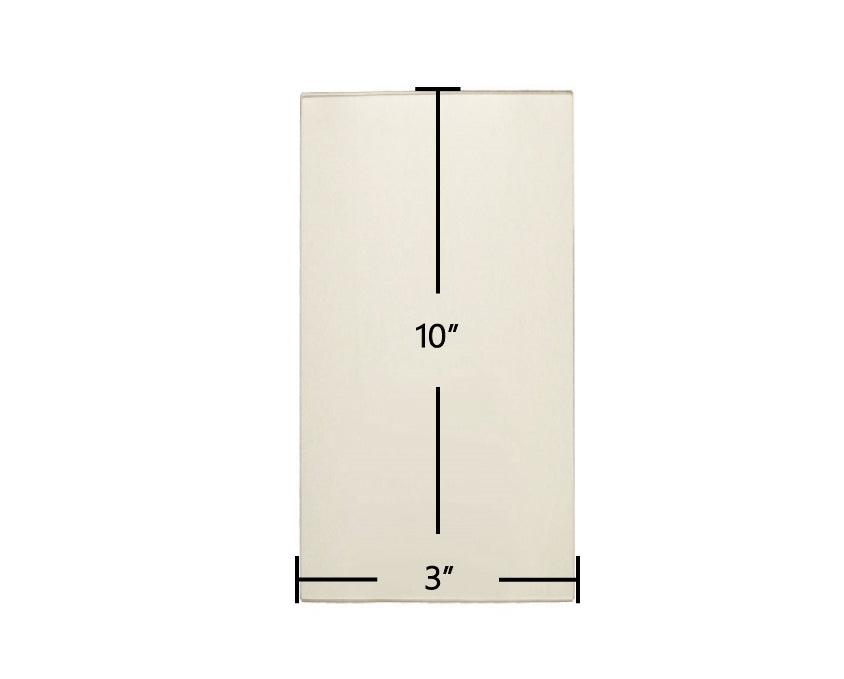
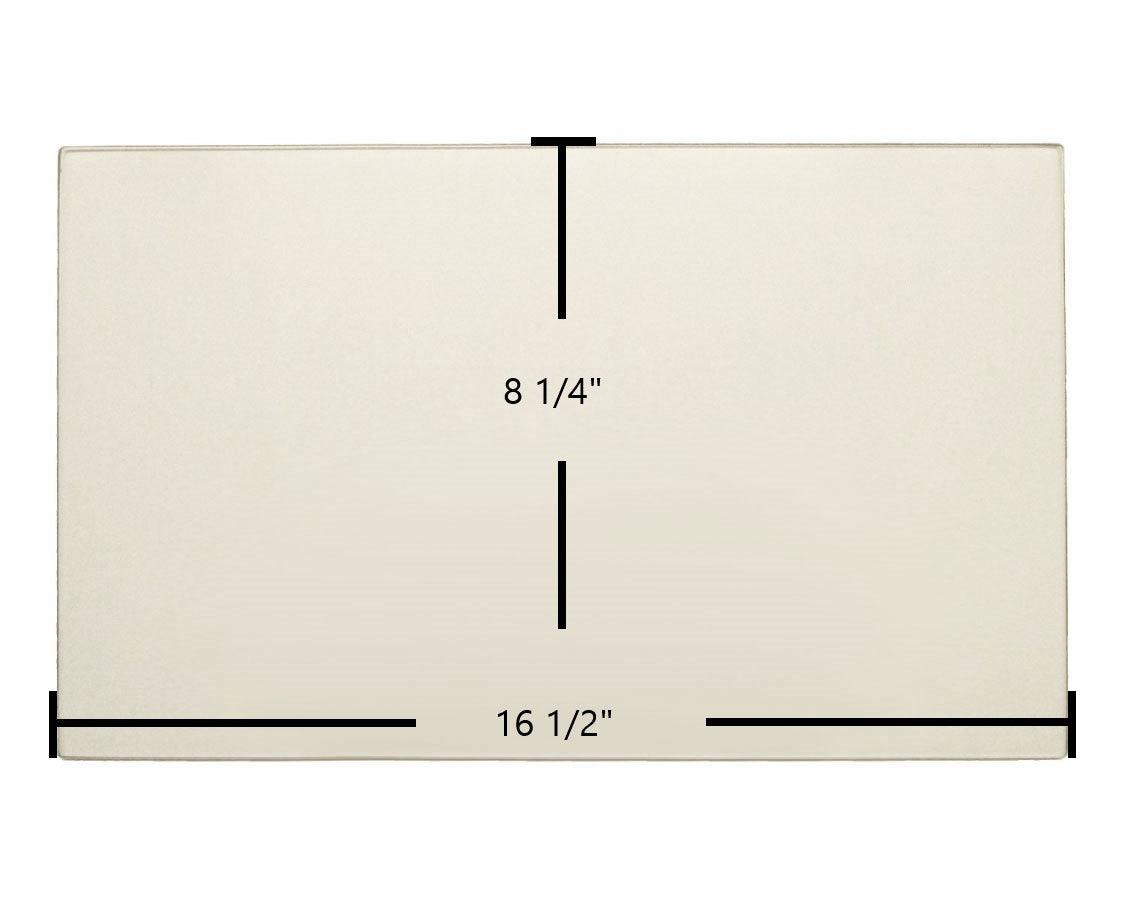
Replacement ceramic glass panel prices by model
Maintenance Schedule and Troubleshooting Workflow
A simple routine prevents most of the problems covered above:
| Task | Frequency | Why It Matters |
|---|---|---|
| Empty and clean burn pot | Every 2-3 days | Prevents clinker buildup and ignition failure |
| Scrape heat exchanger | Weekly | Maintains heat distribution |
| Inspect door gasket | Monthly | Catches air leaks early |
| Clean venting and exhaust | Seasonally | Restores airflow and burn quality |
| Replace worn gasket | As needed | Seals the firebox |
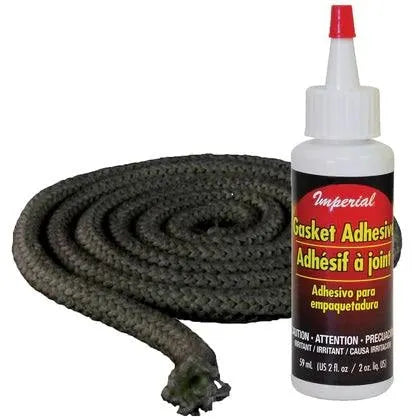
If you are resealing the door, an Earth Stove door gasket kit with adhesive covers the job. When a burn problem persists after cleaning, work through the feed system, then ignition, then venting, in that order.
Order the Right Replacement Glass for Your Master Forge Stove
Getting the right part the first time comes down to matching your model number to the panel dimensions. Measure your old glass, photograph the mounting hardware before removal, and order the gasket at the same time. Total Hearth cuts ceramic glass to exact specifications and offers expert technical guidance. Get started with Total Hearth and restore safe, clear operation to your stove.
Frequently Asked Questions
Are Master Forge pellet stoves reliable?
Owner feedback is split rather than uniformly positive. Owner reviews are sharply divided, with some praising heating performance, the large hopper, Wi-Fi remote control, and steady operation, while others report feed and burn issues. Treat reliability as model-specific: check the exact model number and its reviews before buying.
What are common Master Forge pellet stove problems?
The most frequently reported Master Forge pellet stove problems involve the feed system and burn quality. Owners sometimes describe pellets piling up without burning completely, which can point to feed or airflow issues. Pellet jams, a stalled auger motor, and failed ignition are the usual suspects. Start troubleshooting by emptying the hopper, checking the auger for a foreign object, and confirming the burn pot and venting are clear before replacing parts.
Where can I find a Master Forge pellet stove manual?
The Master Forge pellet stove manual is the authoritative source for clearances, venting, thermostat settings, and part numbers. Check the model plate on the stove first, since listings span different hopper capacities and heating ranges. Manuals are typically available through the retailer that sold the stove and through parts suppliers. Keep the manual with your maintenance records, because the clearance and venting figures in it govern a safe installation and are what an inspector will reference.
What replacement parts are available for Master Forge pellet stove models?
Glass is the part owners most often need, and it must be ceramic, not tempered. Total Hearth stocks three OEM ceramic panels: a 12 3/8" x 9" panel for the H140XL and H80XL at $107.88, a 10 1/2" x 9" 66665-GLASS panel for the H30XL at $105.88, and a 13" x 12" 66633-CENTER-GLASS center panel for the H3W80XL bay front at $161.88. Gaskets are sold separately.
What is the best setting for a Master Forge pellet stove?
There is no single best setting, because the right one depends on outside temperature, your home's layout, and the model's BTU output. Start on a mid-range heat setting and adjust the feed rate until the burn pot holds a small, steady flame rather than a smoldering pile. If you use a thermostat or app control, set a target room temperature and let the stove cycle. Consult the manual for the recommended feed trim before changing factory defaults.
