 Free shipping for all U.S. orders over $100


Last Updated: November 24, 2026
Quick Summary
The best ember material for your fireplace is the one your owner's manual names, so check the manual's ember section before buying anything. It specifies the approved material type, quantity and placement, and that approval is tied to your appliance, not the bag.
- Rock wool is a high-temperature mineral fiber that glows orange-red when flames pass over it.
- Never substitute craft wool, steel wool or household insulation for rated ember material.
- Pull the wool into dime-sized, wispy pieces and keep it clear of burner ports and the pilot.
- Some vent-free manufacturers prohibit loose ember material entirely, so believe the manual.
- Replace embers when the glow fades, the wool mats, or soot appears near the burner.
Table of Contents
- Start With Your Fireplace Manual, Not the Product Page
- Rock Wool for Gas Fireplace: What It Is and What It Does
- Comparing Ember Materials: Rock Wool, Ceramic Fiber and Reflective Additives
- Glowing Embers for Gas Fireplace: Vented, Vent-Free and Insert Differences
- How to Place Embers on Gas Logs Without Blocking the Burner
- How Much Ember Material to Use and What Package Size to Buy
- Gas Fireplace Embers Replacement: When to Refresh and What to Check
- Troubleshooting Soot, Weak Glow and Uneven Flames After Installation
- Frequently Asked Questions
Start With Your Fireplace Manual, Not the Product Page
The best ember material for your fireplace is the one your owner's manual names. That single sentence will save you more money and frustration than any buying guide. Gas fireplaces are engineered systems, and the ember material specified for one burner assembly can be wrong, or even unsafe, for another. Before you shop, pull out the manual and look for the ember or glowing embers section. It tells you the approved material type, the quantity, and where it goes.
At Total Hearth, we hear from homeowners who bought ember material online and later learned it wasn't rated for their unit. The fix is simple: match the manual first, then the product. The Hearth, Patio & Barbecue Association notes that gas hearth appliances should be installed and maintained per the manufacturer's instructions, and ember media is part of that system.
If your manual is long gone, search the model number on the rating plate, usually behind the access panel or under the firebox. That plate is your starting point.
Rock Wool for Gas Fireplace: What It Is and What It Does
Rock wool for gas fireplace use is a high-temperature mineral fiber that mimics the look of glowing coals when flames pass over it. Its job is visual: it catches and reflects flame, creating the orange-red glow that makes a gas log set look like a real fire.
The material is sometimes called ember wool, glowing embers, or mineral wool. Because it sits near the burner, it must be rated for high-temperature use. Never substitute craft wool, steel wool, or insulation. Those can melt, rust, or clog burner ports.
How Ember Wool Creates the Glow
Flames pass through the loose fibers and heat them. The fibers glow orange-red, and small reflective additives in some products add sparkle. The effect depends on airflow: too much material smothers the flame, too little leaves the burner exposed. Getting the balance right is the whole game.
Comparing Ember Materials: Rock Wool, Ceramic Fiber and Reflective Additives
Several material families are used for gas fireplace embers, and each behaves differently under flame. This comparison explains how they differ in glow, appearance, compatibility, and intended use so you can match the material to your manual.
| Material | How It Glows | Appearance | Compatibility Notes | Intended Use |
|---|---|---|---|---|
| Rock wool / mineral wool | Fibers catch flame and glow orange-red; loose, airy tufts let flames pass through | Soft, coal-like glow with irregular texture | Most vented log sets and inserts when the manual allows loose media; some vent-free units prohibit it | General ember bed coverage and glow enhancement |
| Ceramic fiber | Denser fibers hold heat and glow steadily with less airflow | Chunkier, more uniform ember shapes | Often specified where the manual calls for ceramic embers or shaped ember pieces | Units requiring shaped or specified ember media |
| Reflective additives (mica, reflective flakes) | Reflect flame light for sparkle and glints | Bright pinpoint sparkle on top of the ember bed | A finishing layer only; not a substitute for base ember material | Enhancing an existing ember bed |
Rock wool is a common option. Its glow depends on airflow: packed too densely, it can smother the flame and cause soot.
The material is only part of the picture; whether the manual permits that material family and whether it is arranged thin enough for flames to pass through also matters. If your manual names a specific material, that name overrides any general comparison here.
Watch out: do not substitute materials that are not rated for high-temperature use inside a firebox, such as craft wool, steel wool, or household insulation.
Glowing Embers for Gas Fireplace: Vented, Vent-Free and Insert Differences
Glowing embers for gas fireplace units differ by venting type, and this is where most buying mistakes happen. Rather than memorizing rules, use a short decision sequence that starts with the appliance and ends with the product.
Step 1: Identify the venting category. Vented fireplaces exhaust combustion gases outdoors through a chimney or flue. Vent-free (also called ventless or unvented) units burn inside the room and rely on an oxygen detection safety pilot. Fireplace inserts are sealed or vented systems with their own approved media list. The rating plate and manual state the category; do not guess from appearance.
Step 2: Check the manual's media section. Look for the ember or glowing embers section and note whether it permits loose ember material, specifies a material type, and gives a quantity. If the manual says no loose embers, believe it. No glow is worth a safety risk.
Step 3: Apply the venting rule of thumb. Vented fireplaces generally tolerate loose ember media well because combustion gases leave the home. Vent-free units are far more sensitive to anything that interferes with the burner or oxygen sensor, and some vent-free manufacturers prohibit loose ember material entirely. Inserts sit in between: check the insert manual rather than the log set packaging, because the insert's approval list governs.
Step 4: Confirm the log set matches the appliance. A log set rated for a vented fireplace is not automatically approved for a vent-free unit, and the reverse is also true. The log set manual and the fireplace manual must agree on the ember material.
Step 5: Buy only after steps 1 through 4 agree. If the manual is missing, search the model number on the rating plate, usually behind the access panel or under the firebox, and contact the manufacturer before ordering.
If your manual is silent on ember material, treat that silence as a no until the manufacturer confirms otherwise.
Watch out: do not move ember material from a vented log set into a vent-free fireplace, even if the material looks identical. The approval is tied to the appliance, not to the bag.
How to Place Embers on Gas Logs Without Blocking the Burner
Learning how to place embers on gas logs comes down to one principle: cover the burner lightly, never block the ports. Here's the sequence we recommend.
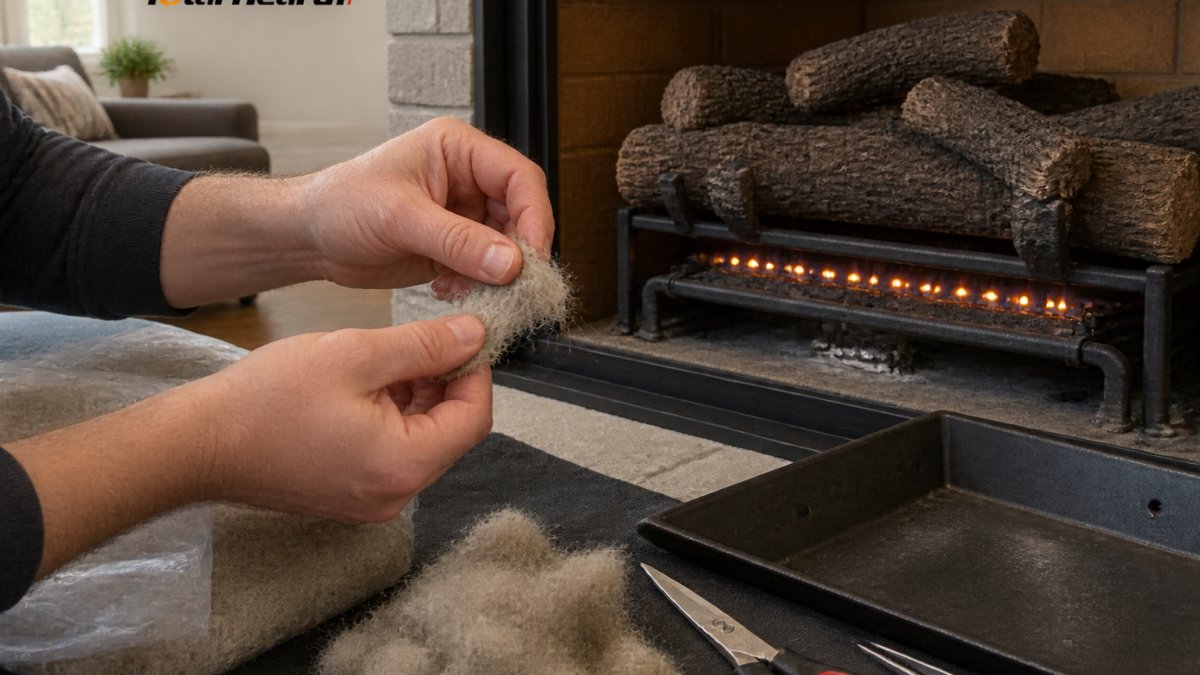
- Turn the gas off and let the fireplace cool completely.
- Read the manual's ember placement diagram.
- Pull the wool into dime-sized, wispy pieces. Thin is the goal.
- Spread a thin layer over the burner pan and between the logs, avoiding the burner holes and ports.
- Keep material clear of the pilot and any air openings.
- Reassemble the logs per the diagram, then test the flame.
Watch out: packing the wool into a dense mat is the most common error. It smothers the flame, causes soot, and can force gas to burn poorly. A thin, airy layer glows better and burns cleaner.
How Much Ember Material to Use and What Package Size to Buy
Use only as much ember material as your manual specifies, and buy a package size that matches. Most log sets call for a light covering, not a full bag. A small handful teased thin usually covers a standard burner pan. If you're unsure, start with less and add.
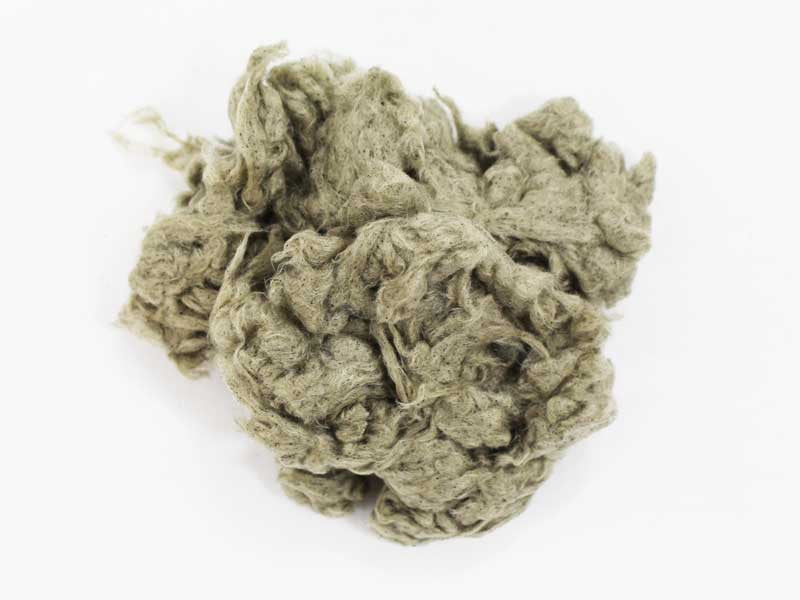
For a purchasable option, our Gas Stove & Fireplace Mineral Wool 050-721 is an OEM glowing embers replacement compatible with Heat N Glo, Heatilator, Quadra-Fire, and Majestic units, rated for natural gas and liquid propane. It ships in bulk loose-fill, so you can use only what your manual calls for and keep the rest for later touch-ups. Always confirm the part against your model's manual before ordering.
Gas Fireplace Embers Replacement: When to Refresh and What to Check
Gas fireplace embers replacement is due when the glow fades, the wool looks matted or dirty, or you notice soot near the burner. Ember material doesn't last forever. Heat, dust, and repeated flame exposure break down the fibers over time.
Refresh the embers when:
- The glow looks dull or uneven
- The wool has clumped into dense patches
- You see soot or discoloration on the logs
- You've had the burner serviced
If your logs themselves are worn, our guide on how to replace gas fireplace logs safely walks through the process so the embers and logs go back correctly together.
Troubleshooting Soot, Weak Glow and Uneven Flames After Installation
If the fire looks wrong after you add embers, the material is usually the cause, and the fix is usually less of it. Here's how to diagnose the three most common problems.
Soot: too much material or blocked ports. Remove excess wool, clear the burner holes, and check that the flame is mostly blue at the base.
Weak glow: the wool is too sparse or too densely packed. Tease it thinner and spread it evenly so flames can pass through.
Uneven flames: material is crowding one side of the burner. Redistribute it and confirm the logs sit in their marked positions.
If problems persist after adjusting the embers, stop using the fireplace and have a qualified technician inspect the burner and gas flow. The U.S. Consumer Product Safety Commission advises homeowners to have gas appliances serviced by professionals and to follow manufacturer instructions for any media placed in the firebox.
Choosing ember material doesn't have to be guesswork. Match the manual, pick the right material for your venting type, and keep the layer thin. If you're ready to refresh the glow, Total Hearth stocks OEM mineral wool and offers expert technical guidance to help you confirm the right part for your model, with fast shipping direct to your door. Get started with Total Hearth and bring back a realistic, even glow to your fireplace.
Frequently Asked Questions
What are the embers in a gas fireplace made of?
Most glowing embers are made of mineral wool, also called rock wool or ember wool, a high-temperature fiber that glows orange-red when flame passes over it. Total Hearth's Gas Stove & Fireplace Mineral Wool (part 050-721, $9.99) is an OEM mineral wool rated for natural gas and liquid propane units. Check your appliance manual for the material type your model specifies before buying anything.
How much ember material should I use in a gas fireplace?
Follow the quantity in your manual first; it overrides any general rule. When the manual gives no number, start with a thin layer of dime-sized pieces over the burner ports, leaving gaps so flame can pass through. You can add more later, but removing excess after soot appears is harder. Buy based on your model's stated quantity rather than guessing from the bag size.
Is rock wool the same as ember material for a gas fireplace?
In practice, yes. Rock wool, mineral wool and ember wool are names for the same high-temperature fiber sold as glowing embers. The important distinction is whether the product is rated for your appliance and fuel type. Generic insulation wool is not a substitute. Use material listed for gas fireplace use, like an OEM part number matched to your model, and confirm it is approved for natural gas or liquid propane as your unit requires.
Can adding ember material affect gas fireplace operation?
Yes. Ember material placed over burner ports or tubes can obstruct gas flow and airflow, which causes sooting, weak or uneven flames, and a duller glow. Keep pieces small, spread them thinly, and never cover the burner holes completely. If flames turn lazy or black tips appear after installation, remove some material and rearrange it. Any change in flame behavior is a signal to recheck placement against the manual before continued use.
